


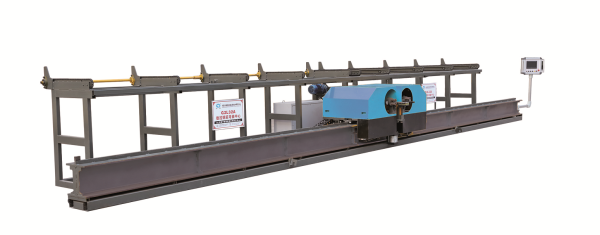

The construction industry depends on accurately processed reinforcement steel to support the development of safe and durable infrastructure. From residential buildings and commercial complexes to industrial facilities and transportation projects, reinforced concrete remains a fundamental construction material. Preparing steel bars according to engineering drawings requires precise measurements, consistent bending angles, and reliable production methods. As construction projects become larger and more demanding, traditional manual processing can struggle to meet increasing production requirements. Modern automation provides an effective alternative, and a cnc rebar bending machine can help fabrication businesses achieve better production control and manufacturing consistency.
The Importance of Precision in Rebar Fabrication
Reinforcement bars must be shaped according to specific structural requirements before being installed in concrete elements. Different construction applications require different bending angles, dimensions, and configurations.
Accurate bending is important because reinforcement components must fit correctly within the designed structural arrangement. Inconsistent measurements can create installation difficulties, additional adjustments, and unnecessary material waste.
Manual bending operations often depend heavily on operator experience and repeated measurements. While suitable for certain smaller tasks, these methods can become challenging when fabrication workshops need to process large quantities of steel.
Automated bending equipment helps address these challenges by introducing controlled production movements and programmable settings.
How CNC Technology Improves Steel Processing
Computer Numerical Control technology allows machinery to perform manufacturing operations according to programmed instructions. In rebar fabrication, this provides greater control over bending angles, dimensions, and production sequences.
Operators can configure machine parameters according to project requirements and use established settings for repeated production tasks.
This approach helps reduce manual adjustments and supports consistent manufacturing results. It also makes production planning easier for businesses handling different reinforcement orders.
CNC technology can be particularly valuable for fabrication facilities that require repeatable bending operations and more organized manufacturing workflows.
Increasing Production Efficiency
Production efficiency is essential for steel fabrication companies working with construction contractors and infrastructure developers. Delays in reinforcement preparation can affect project schedules and create additional pressure on manufacturing teams.
Automated bending equipment helps streamline repetitive processing activities and reduce the time spent on manual operations.
Instead of manually shaping every reinforcement bar, operators can supervise programmed production tasks and focus on material preparation, quality inspection, and equipment monitoring.
This improved division of responsibilities can help businesses make better use of their available workforce and manufacturing resources.
Actual production output depends on machine specifications, bar dimensions, bending requirements, and operating conditions.
Maintaining Consistent Bending Quality
Consistency is a major requirement in modern reinforcement manufacturing. Large construction projects may require hundreds or thousands of similarly shaped steel components.
Producing these components with consistent measurements helps simplify installation and improve coordination between fabrication workshops and construction teams.
CNC-controlled bending operations follow predefined settings, supporting repeatability across production batches.
However, reliable results also depend on proper machine calibration, suitable material quality, trained operators, and regular equipment maintenance.
Businesses that combine automated technology with effective quality control can establish more dependable production standards.
Improving Material Utilization and Reducing Waste
Steel is one of the most important expenses in reinforcement fabrication. Poor measurements, incorrect bending, and repeated production errors can increase raw material consumption.
Automated machinery supports more controlled processing by following established bending instructions. With accurate planning and appropriate machine settings, manufacturers can reduce avoidable mistakes and improve material utilization.
Better production organization can also reduce unnecessary handling and reprocessing.
These improvements may contribute to lower operating expenses over time, particularly for businesses managing regular high-volume fabrication orders.
Applications Across Construction and Infrastructure
CNC rebar bending technology supports a wide range of construction applications.
Residential developments require shaped reinforcement steel for foundations, beams, columns, and other concrete structures. Commercial buildings and industrial facilities also depend on accurately prepared reinforcement components.
Large infrastructure projects, including bridges and transportation facilities, may require substantial quantities of specially shaped steel bars.
Fabrication companies can use automated equipment to process reinforcement according to different project specifications, provided the required dimensions and bending operations fall within the machine’s capabilities.
This flexibility helps businesses serve different customer requirements while maintaining organized production processes.
Creating a More Efficient Fabrication Workplace
A well-managed fabrication workshop requires effective coordination between workers, materials, and machinery.
Automated bending equipment can reduce repetitive manual activities and allow employees to concentrate on important responsibilities such as material preparation, machine supervision, and finished-product inspection.
Workplace safety must remain a priority. Operators should receive appropriate training and follow machine instructions, protective procedures, and recommended maintenance schedules.
Regular equipment inspections can also help identify potential operational problems before they interrupt production.
Choosing Suitable Rebar Bending Equipment
Selecting the right machinery requires careful consideration of current production needs and future business objectives.
Buyers should evaluate compatible steel diameters, bending capacity, machine configuration, processing speed, automation functions, and power requirements.
Other important considerations include equipment durability, maintenance accessibility, spare parts availability, technical assistance, and operator training.
Comparing these specifications helps manufacturers identify machinery that matches their production requirements and investment plans.
Conclusion
Modern steel fabrication requires accurate processing, efficient production management, and consistent manufacturing quality. As construction projects continue to increase their reinforcement requirements, CNC technology offers practical advantages for businesses seeking to modernize their operations.
From improving bending repeatability and reducing manual effort to supporting better material utilization, automated equipment can strengthen overall fabrication performance. Investing in a dependable cnc rebar bending machine can help steel processing businesses improve productivity, serve construction customers more effectively, and build a stronger foundation for long-term industrial growth.