


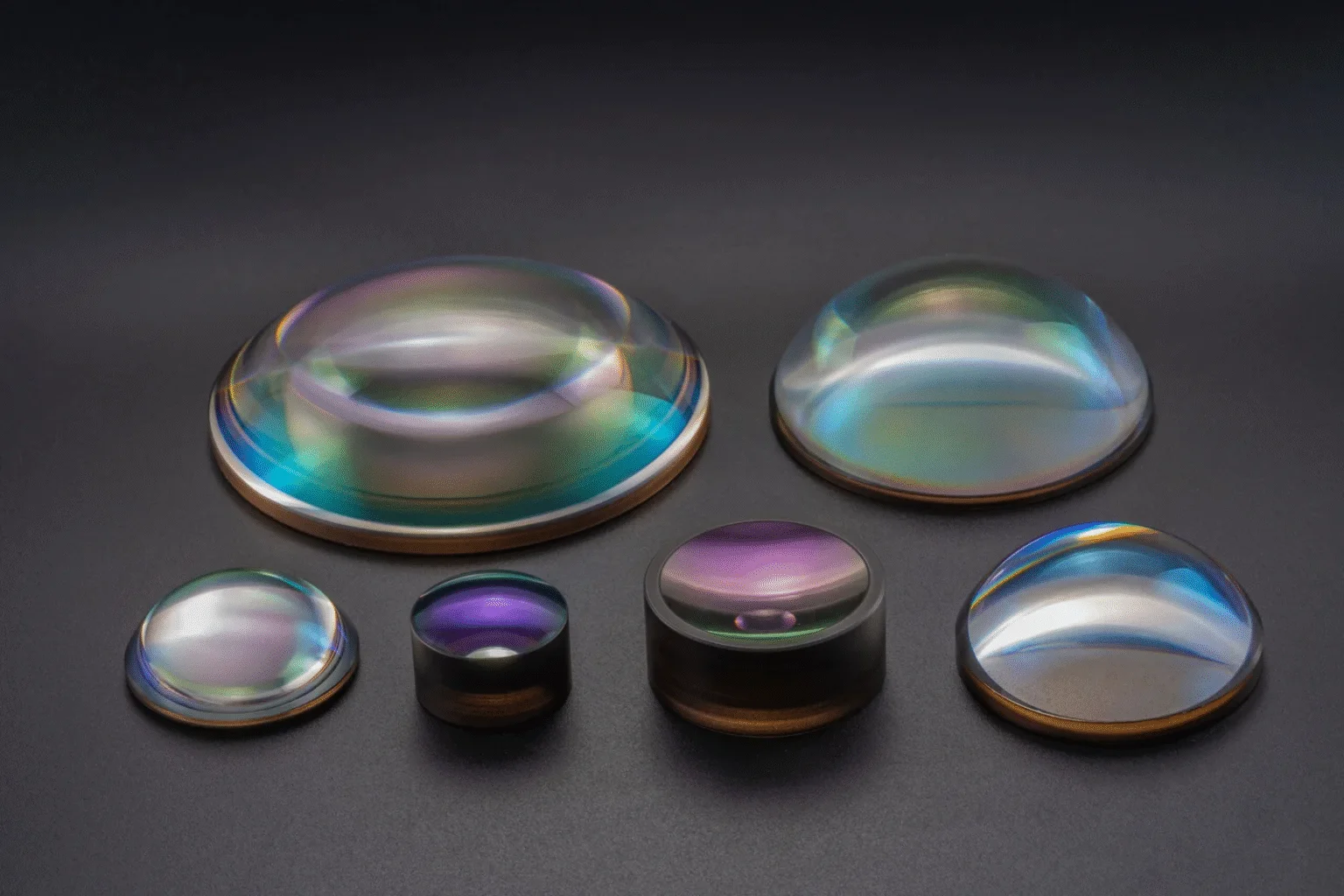

Precision optics play an essential role in modern imaging, scientific research, industrial inspection, and electronic devices. Among the most widely used optical components, spherical lenses are valued for their ability to refract light and form images through carefully designed curved surfaces. Their performance depends on material quality, surface accuracy, curvature, and optical design.
A glass spherical lens is an optical component featuring one or more spherical surfaces that bend incoming light to produce a desired focusing or diverging effect. These lenses are used in a wide range of optical arrangements, from simple magnifying systems to sophisticated imaging equipment. Understanding their construction and working principles helps engineers select suitable components for different applications.
What Is a Spherical Lens?
A spherical lens is made from transparent optical material with at least one curved surface shaped like part of a sphere. Light changes direction as it passes between materials with different refractive indices. This phenomenon, known as refraction, allows the lens to converge or diverge light rays.
Spherical lenses are generally classified into two main categories:
- Convex lenses: These are thicker near the center than at the edges and generally bring parallel light rays together at a focal point.
- Concave lenses: These are thinner near the center and generally spread parallel incoming light rays apart.
The choice between these designs depends on the optical system’s requirements, including focal length, image formation, magnification, and working distance.
How Does a Glass Spherical Lens Work?
The working principle of a spherical lens is based on refraction. When light enters the lens, it changes direction because the optical properties of glass differ from those of the surrounding medium. As light exits the opposite surface, it may bend again.
The curvature of the lens surfaces determines how strongly the light is redirected. In a convex lens, incoming parallel rays can converge toward a focal point. In a concave lens, they diverge as though they originated from a virtual focal point behind the lens.
Several factors influence this behavior, including the refractive index of the glass, surface curvature, lens thickness, and wavelength of the incoming light. Optical designers consider these properties together to achieve the required imaging performance.
Important Optical Properties
Selecting a suitable spherical lens requires an understanding of several important optical characteristics.
Focal length: This describes the distance between the lens’s principal plane and its focal point. It influences magnification and the way an optical system forms an image.
Refractive index: This measures how strongly a material bends light. Different optical glass types have different refractive indices, making material selection important for system design.
Surface accuracy: The quality and precision of curved surfaces affect image clarity and optical consistency. Manufacturing imperfections can introduce unwanted distortions.
Light transmission: High-quality optical glass should transmit the required wavelengths efficiently while minimizing unwanted absorption and scattering.
Chromatic aberration: Different wavelengths can refract by different amounts, potentially producing color fringes. Optical designers consider glass dispersion when developing systems that require accurate color reproduction.
Applications Across Different Industries
Glass spherical lenses are used in many technologies that depend on controlled light transmission and image formation.
Cameras and Imaging Equipment
Camera systems use lenses to collect and focus light onto image sensors. Spherical lens elements may be combined with other optical components to achieve the required focal length, image quality, and field of view.
Microscopes and Scientific Instruments
Microscopes use carefully arranged lenses to magnify small objects and reveal fine details. Spherical optical elements are also found in laboratory instruments, inspection systems, and measurement equipment.
Medical and Diagnostic Devices
Optical components support visualization in various medical and diagnostic instruments. Their quality can influence image clarity, light collection, and the accuracy of optical measurements.
Industrial Inspection
Manufacturing facilities use optical imaging systems to inspect products, examine surfaces, and identify dimensional variations. Precision lenses help these systems capture consistent images for analysis.
Laser and Optical Systems
Spherical lenses can focus or expand light beams in laser-related applications and other optical arrangements. The appropriate lens design depends on beam characteristics, wavelength, and system requirements.
Manufacturing and Quality Considerations
Producing a reliable spherical lens requires careful control throughout the manufacturing process. Typical operations include glass selection, shaping, grinding, polishing, cleaning, and inspection. Each stage contributes to the final optical performance.
Surface polishing is particularly important because scratches, irregularities, and contamination can affect how light travels through the component. Manufacturers may also apply specialized optical coatings to improve transmission or reduce reflections at selected wavelengths.
Quality inspection can involve measurements of surface curvature, dimensional accuracy, surface roughness, and optical performance. These checks help ensure that finished components meet the requirements of their intended applications.
Choosing the Right Optical Lens
The best lens depends on the application rather than a single universal specification. Engineers should consider focal length, diameter, glass type, refractive index, wavelength range, coating requirements, and operating environment.
Compatibility with other optical components is equally important. A lens that performs well independently may require adjustments when integrated into a larger imaging or illumination system. Reviewing technical specifications and consulting experienced optical manufacturers can help reduce design errors and improve system reliability.
The Future of Precision Optical Components
Developments in optical materials, advanced manufacturing, and measurement technologies continue to improve lens production. More accurate polishing methods, improved coatings, and better inspection processes are helping manufacturers meet increasingly demanding requirements.
Specialist optical companies such as ARV Optical contribute to this wider industry through optical products and component solutions. Exploring their technical resources can help engineers and buyers understand different optical designs and identify suitable components for their projects.
Conclusion
Glass spherical lenses remain important components in modern optical engineering because of their versatility and ability to control light through refraction. Their applications range from cameras and microscopes to industrial inspection and scientific instruments. By considering material properties, surface accuracy, focal length, and manufacturing quality, engineers can select suitable lenses for reliable optical performance. Continued innovation in precision manufacturing will further expand the possibilities of spherical lens technology.