


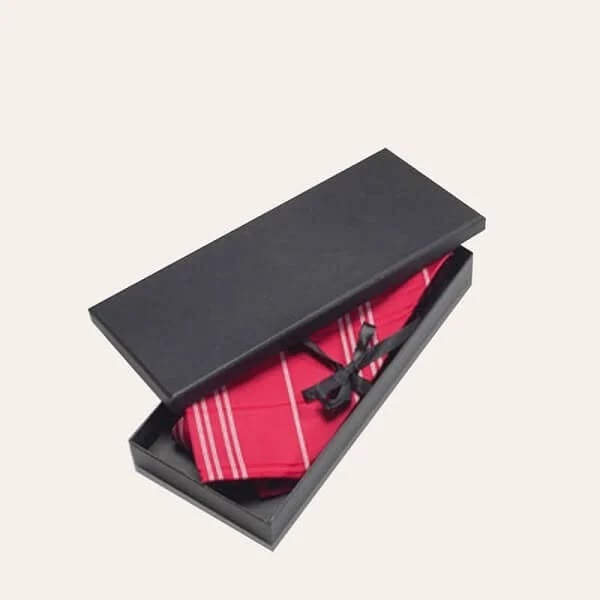

A silk tie is a fussy thing. Fold it wrong, toss it in a box with a few other items, and by the time a customer opens it there’s a crease across the middle that no amount of hanging in a steamy bathroom will fully fix. That’s a shame, because the tie itself might be beautiful. People judge what they see in the first ten seconds, and with neckwear, that moment belongs to the box.
Whether you run a small online shop, sell through department stores, or make ties for weddings and corporate gifts, packaging has two jobs. It keeps the fabric in good shape, and it makes the person on the other end feel they’re getting something worth wearing. Here are ideas that handle both.
Start With How a Tie Actually Wrinkles
Wrinkles come from pressure and sharp folds. A tie doubled over tightly and squeezed into a thin sleeve will hold that crease for weeks. The fix is rarely fancy: give the tie room, support the fold with something soft, and keep weight off it.
Most makers pick from three layouts. A flat box lets the tie lie fully extended or loosely folded in thirds, with no hard bends. A roll box coils the tie gently around a cardboard core, which avoids creases altogether. A slim hinged box with a tissue lining holds a folded tie with padding at each turn. The flat layout is the most forgiving and the easiest to ship.
Materials That Help
Acid-free tissue is the quiet hero. Regular tissue can yellow over time and, in rare cases, mark pale silk. Acid-free paper costs a little more but protects the fabric on a shelf for months. Wrapping the tie loosely in a sheet before it goes in the box also keeps dye from rubbing against the lid.
For the box itself, rigid board gives a solid, clean feel and won’t crush in a mail bag. Paperboard folding cartons are lighter and cheaper, and they work well in stores where the box only gets handled a few times. Kraft stock suits a more casual or eco-minded brand. If you sell wool or knit ties, leave a little extra give in the insert, since those fabrics hold folds differently than silk.
A die-cut or molded paper insert is worth a look. It cradles the tie in its shape and stops it from sliding when the box is tilted. Foam works too, but it feels less premium, and some US shoppers now ask about recyclability.
Bow Ties Need Their Own Thinking
A bow tie is small, structured and easy to flatten. Drop one into a long tie box and it rattles around until the knot bends. Men’s Bow Tie Packaging works better in a compact box, usually a square or shallow rectangle, with a snug pulp tray that holds the bow in its natural shape. A little tissue tucked behind the knot keeps the wings from collapsing.
Sets sell well here. A bow tie with a matching pocket square and a pair of cufflinks can share one box with separate compartments, which turns a $25 item into a $60 gift. Wedding parties like this because groomsmen get matching sets that already look presentable.
Ideas That Make Unboxing Feel Special
You don’t need a luxury budget. A few small decisions do most of the work.
- Magnetic or ribbon closures. A lid that shuts with a quiet click or a ribbon pull feels deliberate. It tells the customer someone thought about this.
- A printed message inside the lid. A short line, a care tip, or a thank-you in your own voice. It’s cheap, and people actually read it.
- Colored tissue. Navy under a white lid, or burgundy against kraft, adds contrast at almost no cost. Seal it with a sticker instead of tape so it opens cleanly.
- A window cutout. Retail shelves need to show the pattern. A small window lets shoppers see the weave without handling the tie, which keeps the fabric clean.
- A care card. One line about storing the tie flat or hanging it, and untying it after wearing, cuts down on returns from people who didn’t know.
- A layered reveal. Outer sleeve, then lid, then tissue, then tie. Each step builds a bit of anticipation, and it photographs well for social media.
Gifting Season and Special Events
In the US, October through December is when tie sales and gift boxes pick up, from holiday parties to the end-of-year events that bring everyone back into formalwear. Father’s Day in June is the other big moment, and wedding season runs from late spring into fall. If you know your busy months, order packaging early. Lead times for custom printing can stretch to four or six weeks, and shipping delays near the holidays are common.
Corporate gifting is worth considering as well. Companies buy ties and bow ties for employee anniversaries and client thank-yous, and they often want their logo next to yours. A plain white or black box that accepts a custom sleeve lets you serve different buyers without stocking a dozen designs.
Shipping and Storage Tips
If you sell online, test your setup. Pack a tie, seal the box, and drop it from waist height. Then open it and look for creases. Leave a few packed ties in a warm room for a week too, since heat can set wrinkles deeper.
Ship flat when you can. An outer carton slightly larger than the box prevents shifting. For bulk orders, flat-packed folding cartons save storage space and freight cost, though rigid boxes feel more upscale and may be worth the extra on higher-priced items.
Tell customers how to store the tie once it’s out. A line on the card or your website saying to hang it or lay it flat, not stuff it in a drawer, protects your product’s reputation long after the sale.
Matching the Box to the Price
A $15 polyester tie in a $4 rigid box eats your margin. A $90 hand-sewn silk tie in a thin carton looks cheap. A decent rule of thumb is to keep packaging around five to fifteen percent of the retail price, and to spend extra only where the customer will see and touch it, like the lid and the inside lining.
Before You Order
Measure the tie at its fullest point and add about a quarter inch of room all around. Ask for physical samples, because a screen proof never shows how a paper stock feels. Check that the inside surface is smooth, since rough cardboard can snag silk. And keep the design simple. One strong logo and a good color will do more than a busy layout.
The Takeaway
Good tie packaging does something simple: it keeps the fabric smooth and makes opening the box feel like a small event. Soft tissue, a well-fitted insert, a clean lid and one personal touch get you there. Do those four things well and the tie arrives looking as good as the day it was made, which is exactly what the customer hoped for.