


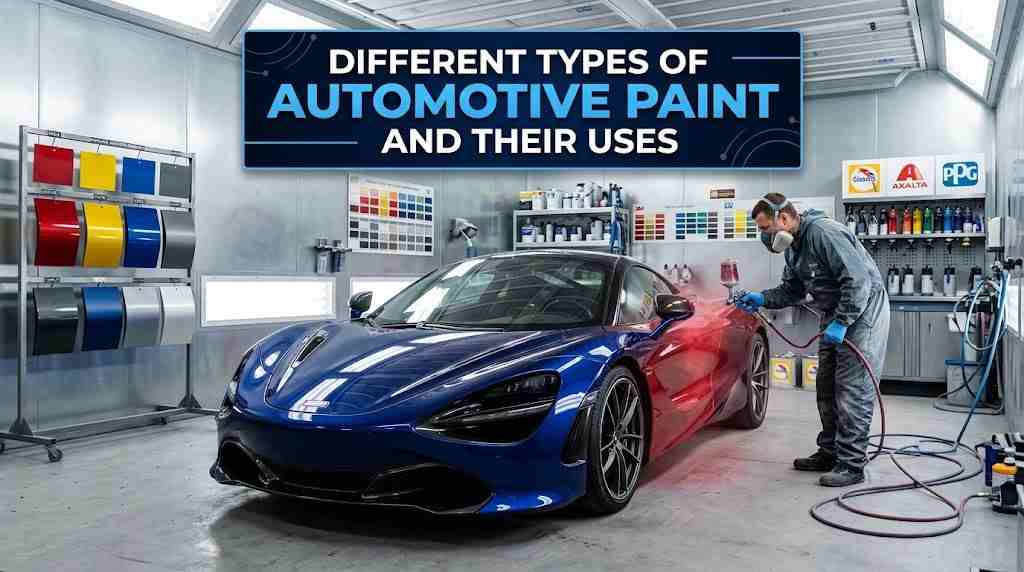

A car’s paint does much more than make it look attractive. It protects the body from moisture, sunlight, road debris, and other environmental elements that can gradually damage the vehicle’s exterior. Whether you’re restoring an older car, repairing accident damage, or giving your vehicle a fresh appearance, choosing the right automotive paint can make a significant difference in the final result.
However, not all automotive paints are the same. Some are designed for durability and everyday driving, while others focus on creating a deep shine, a distinctive finish, or a premium appearance. Understanding these differences can help you make a more informed decision before investing in a paint job.
If you’re considering a repaint or repairing damaged paintwork, an experienced Auto paint repair shop Calgary can help you identify the appropriate paint system based on your vehicle’s existing finish, condition, and intended use. Knowing the basics beforehand also makes it easier to discuss your options and understand the recommendations you receive.
In this guide, we’ll explore the most common types of automotive paint, explain where each one works best, and share practical tips for choosing a finish that suits your car and your budget.
1. Solid Paint
Solid paint is one of the most common and straightforward automotive paint options. It typically uses a single colour without metallic flakes, pearlescent particles, or other decorative effects. Popular examples include white, black, red, and basic blue.
Because of its relatively simple appearance, solid paint is frequently used on everyday passenger vehicles, fleet cars, and commercial vehicles.
Benefits of Solid Automotive Paint
- Cost-effective: Solid paint systems can be less expensive than more elaborate finishes, although the final cost depends on the products and repair process.
- Straightforward appearance: A consistent colour provides a clean, classic look.
- Easier colour matching in some cases: Simple colours may be easier to reproduce than complex metallic or pearl finishes, provided the original paint has not significantly faded.
- Suitable for many vehicles: Solid colours work well on sedans, hatchbacks, SUVs, and work vehicles.
Where Is Solid Paint Used?
Solid paint is a practical choice for drivers who prefer a traditional finish without additional visual effects. It’s also suitable for certain spot repairs and panel repainting, although blending may still be necessary to achieve a seamless result.
One thing to remember is that simple paint doesn’t automatically mean maintenance-free paint. Dark colours, particularly black, can reveal swirl marks, scratches, and dust more easily than lighter shades.
2. Metallic Paint
Metallic paint contains tiny reflective particles, usually made from aluminium, that create a shimmering appearance when light hits the vehicle’s surface. This gives the paint additional depth and makes the colour appear to change slightly depending on the viewing angle and lighting conditions.
Silver, metallic grey, blue, and metallic red are popular examples.
Advantages of Metallic Paint
Metallic finishes offer several benefits for drivers who want something more distinctive than a standard solid colour.
- Attractive visual depth: Reflective particles help create a brighter, more dynamic appearance.
- Modern styling: Metallic finishes are widely used on contemporary passenger vehicles and luxury models.
- Good everyday appeal: Many metallic colours balance a premium look with practical, mainstream styling.
- Subtle surface variation: Fine metallic particles can make minor surface irregularities less noticeable under certain lighting conditions.
What Should You Know Before Choosing Metallic Paint?
Metallic paint can be more challenging to repair than solid paint. The particles must be distributed consistently to ensure that the repaired area matches the surrounding panels.
If the application technique, spray pattern, or paint orientation differs, a repaired panel may appear lighter or darker from certain angles. Professional colour matching and blending are particularly important when repairing metallic finishes.
Metallic paint is an excellent option for drivers who want a sophisticated appearance and are comfortable with the additional care that a quality repair may require.
3. Pearlescent Paint
Pearlescent paint, sometimes called pearl paint, uses special pigments that reflect and refract light to produce a layered, luminous effect. Unlike conventional metallic paint, which primarily relies on reflective metal particles, pearlescent paint creates more complex colour variations.
For example, a white pearl finish may show subtle hints of pink, blue, or gold depending on the lighting and viewing angle.
Why Choose Pearlescent Automotive Paint?
Pearlescent finishes are often found on premium vehicles and models where appearance is an important selling point.
Their main advantages include:
- Distinctive appearance: The finish creates a refined effect that can look different in sunlight and shade.
- Rich colour depth: Multiple layers can give the paint a more dimensional appearance.
- Premium styling: Pearl finishes are popular for white, silver, red, and other carefully selected colours.
Is Pearlescent Paint Difficult to Repair?
Yes, it can be. Many pearl finishes use a multi-stage paint system consisting of a base colour, a translucent effect layer, and a protective clear coat.
The number of coats and the thickness of the effect layer can influence the final colour. Even a small variation in application can make a repaired area stand out.
For this reason, pearlescent paint repairs often require careful preparation, test spraying, and blending into neighbouring panels. Although the finish can be beautiful, it’s worth considering the potential repair complexity before choosing it.
4. Acrylic Paint
Acrylic automotive paint is a broad category that includes different paint chemistries, particularly acrylic lacquer and acrylic enamel. These products have different application methods, drying characteristics, and performance levels.
Acrylic lacquer was widely used on older vehicles because it could produce a smooth, glossy finish and was relatively easy to polish. However, it generally offers less durability and environmental resistance than many modern automotive paint systems.
Acrylic enamel, on the other hand, forms a harder finish and may provide better durability depending on the formulation.
Common Uses of Acrylic Paint
Acrylic paint may be appropriate for:
- Classic car restoration.
- Certain vintage vehicle repainting projects.
- Older vehicles where maintaining a period-appropriate finish is important.
- Selected repair projects where the existing coating system and product specifications permit its use.
Is Acrylic Paint Right for Your Car?
The answer depends on the vehicle, the desired appearance, and the specific product being considered.
Although acrylic systems can be useful for restoration work, they are not automatically the best option for a modern daily driver. Many contemporary repair facilities use more advanced basecoat-clearcoat systems because of their appearance, durability, and compatibility with current refinishing practices.
It’s also important to distinguish between acrylic lacquer and acrylic enamel rather than assuming every acrylic product behaves the same way.
5. Urethane Paint
Urethane automotive paint is widely used in modern refinishing because it can provide a durable, attractive finish when applied according to the manufacturer’s specifications.
These systems are formulated to offer good resistance to everyday wear, weather exposure, and many common environmental contaminants. Depending on the product, urethane coatings may be used as single-stage finishes or as part of a basecoat-clearcoat system.
Key Benefits of Urethane Paint
- Durability: Many urethane products are designed to withstand regular driving conditions.
- High-quality appearance: They can produce a smooth, professional-looking finish.
- Versatility: Different formulations are available for a variety of automotive applications.
- Long-term performance: Correct preparation, application, and curing help the coating maintain its appearance over time.
When Is Urethane Paint Used?
Urethane paint is commonly used in collision repair, complete vehicle repainting, and restoration projects where a durable finish is required.
However, product selection matters. Some urethane products contain isocyanates, which can pose serious health risks if inhaled or absorbed through the skin. Application should follow the product’s safety data sheet and applicable workplace requirements. Professional spray facilities may require supplied-air respiratory protection and appropriate ventilation.
For most vehicle owners, urethane paint is best handled by trained professionals rather than applied in a typical home garage.
6. Water-Based Automotive Paint
Water-based automotive paint uses water as a major carrier instead of relying entirely on conventional solvent-based formulations. Modern waterborne basecoats are widely used in professional body shops, particularly for colour application within basecoat-clearcoat systems.
It’s important to understand that water-based automotive paint is not simply ordinary household paint diluted with water. These are specialised products developed for vehicle refinishing.
Benefits of Water-Based Paint
- Reduced solvent use: Many waterborne basecoats contain less organic solvent than comparable conventional solventborne products.
- Excellent colour reproduction: Professional systems can offer extensive colour-matching options.
- Compatibility with modern refinishing: Many waterborne basecoats are designed for use beneath a suitable automotive clear coat.
- Support for environmental compliance: Depending on the product and application, waterborne systems can help refinishing facilities meet applicable emissions requirements.
Where Is Water-Based Paint Used?
Waterborne basecoats are commonly used in professional collision repair and automotive refinishing facilities. They are particularly useful when matching factory colours on modern vehicles.
Although the paint uses water as a major carrier, the entire refinishing process still requires appropriate equipment, ventilation, and waste handling. Water-based does not mean completely harmless or free of environmental concerns.
7. Single-Stage Paint
Single-stage paint combines the colour and protective finish in one coating system. Unlike a conventional basecoat-clearcoat system, it generally does not require a separate clear coat to create the intended finished appearance.
Some single-stage products are formulated as urethane or other specialised automotive coatings.
Advantages of Single-Stage Paint
- Simpler coating process: Fewer distinct coating stages may be required.
- Practical for selected repainting jobs: It can be suitable for certain older vehicles, work vehicles, and restoration projects.
- Potentially lower material and labour costs: Depending on the product and project, a simpler process may reduce overall expense.
- Straightforward finish: Many single-stage products provide a consistent gloss or other specified appearance.
Limitations of Single-Stage Paint
The final durability and appearance depend on the product chemistry, surface preparation, and application conditions. Some single-stage finishes can be polished to improve their appearance, but not every formulation responds in the same way.
Single-stage paint may also be unsuitable when a particular factory finish requires a separate basecoat and clear coat. The correct choice depends on the vehicle’s original coating system and the refinishing requirements.
8. Basecoat-Clearcoat Paint
Basecoat-clearcoat is one of the most widely used automotive refinishing systems today. It separates the colour layer from the protective outer layer.
The basecoat provides the vehicle’s colour and, when applicable, its metallic or pearlescent effect. The clear coat adds gloss and helps protect the underlying finish from weather exposure, abrasion, and other everyday stresses.
How Does a Basecoat-Clearcoat System Work?
The process generally involves several steps:
- Surface preparation: The damaged or existing finish is inspected, repaired where necessary, cleaned, and prepared for refinishing.
- Primer application, when required: A suitable primer or undercoat helps promote adhesion and provides a consistent foundation.
- Basecoat application: The colour is applied in accordance with the product’s specifications.
- Clear coat application: A compatible clear coat is applied over the basecoat to provide the intended protection and appearance.
- Curing and inspection: The finish is allowed to cure under appropriate conditions before its quality is checked.
Why Is This System So Popular?
Basecoat-clearcoat systems are versatile and can produce a wide range of finishes, from simple solid colours to complex metallic and pearl effects.
The clear coat also provides a surface that can often be polished to improve minor imperfections, provided the coating is suitable and enough clear coat remains.
However, a clear coat is not indestructible. Deep scratches, peeling, severe oxidation, or damage extending through the colour layer may require more extensive refinishing.
9. Matte and Satin Automotive Paint
Matte and satin finishes are designed to reduce the strong reflections associated with traditional glossy paint.
A matte finish has very little shine, while a satin finish offers a soft sheen between matte and full gloss. Both can give a vehicle a distinctive, contemporary appearance.
What Makes Matte Paint Different?
Matte finishes require particular care because their appearance depends on maintaining a consistent surface texture and light reflection.
Traditional polishing compounds and aggressive rubbing can create shiny spots that are difficult to remove without refinishing. Some matte systems use specialised clear coats, while others use different coating arrangements.
Is Matte Paint Practical for Everyday Driving?
It can be, but maintenance is more demanding than with many conventional glossy finishes.
Owners should use cleaning products approved for their particular coating and avoid polishing or waxing unless the manufacturer specifically permits it. Protective films designed for matte finishes may also be worth considering.
Satin finishes can offer a middle ground for drivers who want a less reflective appearance without the extremely flat look of a matte finish.
How to Choose the Right Automotive Paint
With so many options available, the best paint for your vehicle depends on more than colour alone.
Consider Your Budget
Solid and selected single-stage finishes may be economical choices for some projects. Metallic, pearlescent, and specialised matte finishes can require additional materials, preparation, or application expertise.
Always compare complete estimates rather than paint prices alone. Preparation, panel repairs, masking, blending, labour, and curing all influence the final cost.
Think About Your Driving Conditions
A daily driver regularly exposed to sunlight, rain, road salt, and changing temperatures needs a coating system suited to those conditions.
Durability depends on the complete paint system and the quality of the application, not simply whether the paint is described as premium or professional-grade.
Match the Existing Paint
If you’re repairing only one or two panels, matching the original colour and finish is essential. A vehicle’s paint can fade or change over time, meaning the factory colour code may not produce a perfect match by itself.
A professional technician can evaluate the existing finish, use colour-matching tools, and perform test applications when necessary.
Consider Maintenance Requirements
Glossy finishes are often easier to maintain with conventional washing and detailing products. Matte and satin finishes may require specialised products and careful cleaning techniques.
Think about how much time you’re willing to spend maintaining the vehicle before committing to a specialised finish.
Choose a Qualified Refinishing Professional
Even high-quality paint can produce disappointing results if the surface is poorly prepared or the coating is applied incorrectly.
Look for a repair facility that explains its process, uses compatible products, follows manufacturer instructions, and provides clear information about its workmanship warranty.
Common Mistakes to Avoid When Choosing Automotive Paint
Several mistakes can affect the appearance, cost, and durability of a paint job.
Choosing paint based on colour alone: A colour may look excellent in a sample but require specialised application or maintenance.
Ignoring surface preparation: Dirt, grease, corrosion, and poorly prepared old coatings can cause adhesion problems and visible defects.
Assuming expensive paint always lasts longer: Product quality matters, but so do preparation, application, curing, and maintenance.
Overlooking colour blending: A newly painted panel can look noticeably different from neighbouring panels if the colour and effect are not matched carefully.
Using incompatible products: Primers, basecoats, clear coats, and other materials should be compatible according to their manufacturers’ specifications.
Avoiding these mistakes can help you get a finish that looks good and performs as intended.
Conclusion
Different types of automotive paint serve different purposes, from the simplicity of solid colours to the reflective appeal of metallic finishes and the distinctive appearance of matte or pearlescent coatings. Urethane and modern basecoat-clearcoat systems are popular for many refinishing projects, while acrylic and single-stage paints can be appropriate for selected restoration and practical applications. Water-based basecoats also play an important role in modern professional refinishing.
The right choice depends on your vehicle, budget, driving conditions, preferred appearance, and willingness to maintain the finish. Equally important is the quality of the preparation and application process. Before committing to a repaint, discuss your options with an experienced technician who can explain the benefits and limitations of each suitable system. A trusted Calgary Autobody Shop can help you assess your vehicle’s existing paint, select an appropriate finish, and understand what is involved in achieving a consistent, durable result. With the right paint and proper care, your vehicle can maintain its appearance and protection for years to come.