


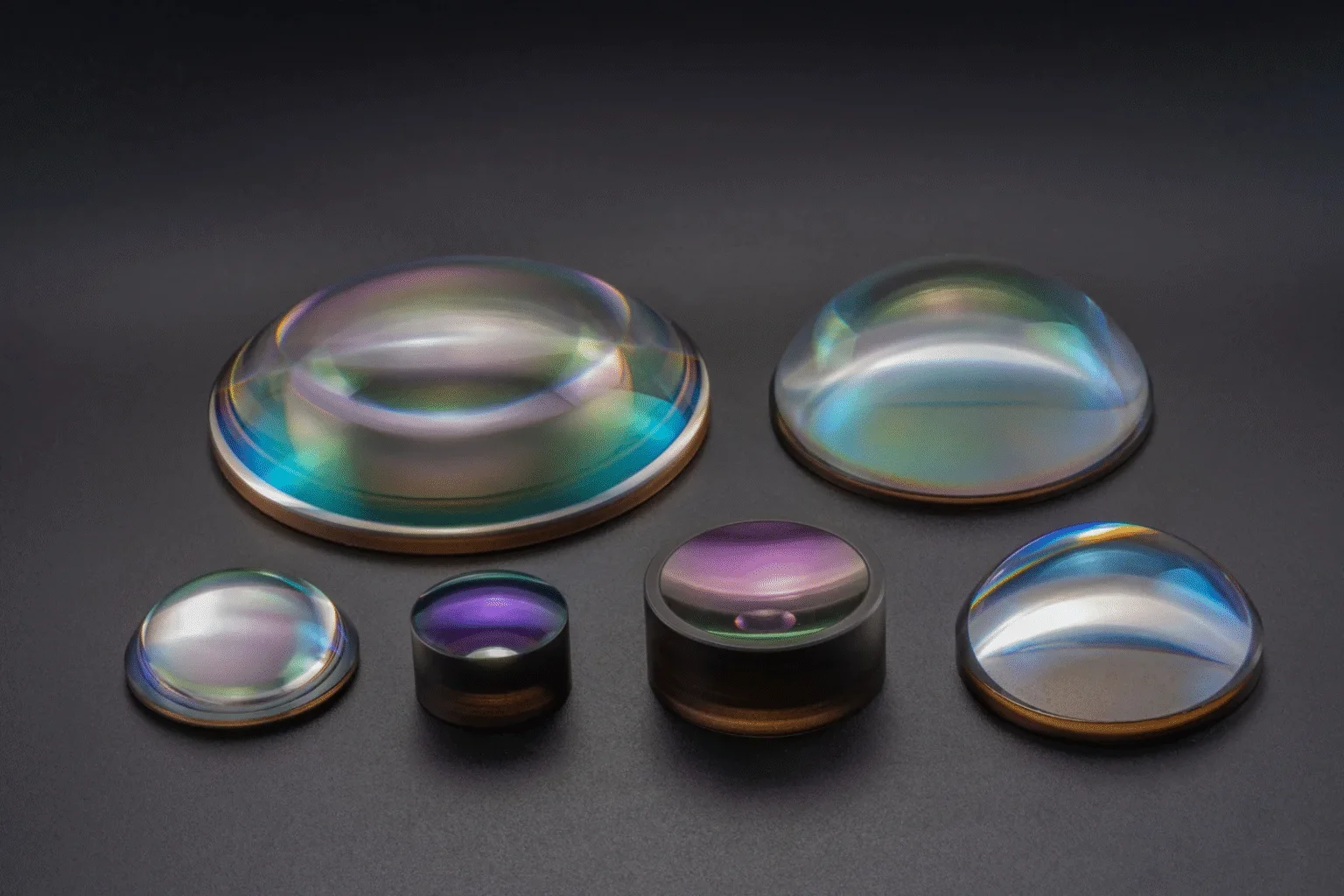

Optical lenses are essential components in imaging equipment, scientific instruments, cameras, and many other technologies that rely on controlled light transmission. A glass spherical lens features one or more curved spherical surfaces designed to refract light and influence how an image is formed. Its optical behavior depends on factors such as surface curvature, glass composition, thickness, and refractive index. Understanding these characteristics helps engineers and manufacturers select suitable lenses for their specific applications.
Glass remains a widely used optical material because it can provide useful transparency, stable optical properties, and compatibility with precision manufacturing processes. When appropriately designed and manufactured, spherical lenses can help optical systems focus light, magnify objects, or form images at a desired position.
How a Glass Spherical Lens Works
A spherical lens uses curved surfaces to change the direction of light as it passes through the material. A convex lens is generally thicker at the center than at the edges and can bring incoming parallel rays toward a focal point. A concave lens is generally thinner at the center and causes parallel rays to diverge.
The exact behavior depends on the lens geometry and the optical properties of the glass. Focal length, surface curvature, refractive index, and lens thickness all contribute to its performance. Designers consider these parameters when determining how a lens should interact with light in a particular optical assembly.
Spherical lenses are often selected because their geometry can be manufactured using established optical fabrication methods. However, the appropriate lens design depends on the required image quality, operating wavelength, and performance goals of the complete system.
Applications Across Different Industries
Glass spherical lenses are used in a broad range of optical applications. Cameras and imaging devices use lenses to focus light onto image sensors, while microscopes use carefully arranged optical elements to magnify small objects. Telescopes and other viewing instruments also use lens systems to collect and focus light from distant subjects.
Industrial equipment may incorporate spherical lenses into inspection systems, measurement instruments, and optical sensors. In scientific applications, lenses can help direct light through an experimental setup or form images for observation and analysis.
Each application has different technical requirements. A lens suitable for a general imaging device may not provide the precision required for specialized measurement equipment. Manufacturers should therefore evaluate the complete set of optical specifications before selecting a component.
Important Factors When Choosing a Spherical Lens
Several considerations can influence the selection of a glass spherical lens. Focal length determines how the lens converges or diverges light, while diameter and thickness affect its physical integration into an optical system. Refractive index and glass composition influence how light travels through the material.
Surface quality and manufacturing tolerances are equally important in applications that demand consistent optical performance. Surface imperfections or deviations from the specified curvature can affect image quality. Depending on the intended use, optical coatings may also be required to manage reflection or improve transmission over a particular wavelength range.
Engineers should additionally consider operating temperature, environmental conditions, mounting requirements, and compatibility with neighboring optical components. Reviewing technical specifications and testing the assembled system can help verify whether a lens meets the project’s requirements.
Why Precision Manufacturing Matters
Reliable optical performance depends on more than the basic shape of a lens. Consistent material quality, accurate surface polishing, dimensional control, and appropriate inspection procedures all contribute to the final result. These factors are especially important when lenses are used in systems that require accurate focusing or repeatable measurements.
Working with an experienced optical supplier can help manufacturers understand available specifications and determine which characteristics matter most for their application. Clear communication about focal length, diameter, glass type, and tolerances can make the selection process more efficient.
Explore Glass Spherical Lens Information with ARV Optical
As imaging and optical technologies continue to advance, spherical lenses remain important components in many light-based systems. Understanding their operating principles and technical characteristics helps engineers and purchasing teams make informed component choices.
Businesses researching glass spherical lens technology can explore ARV Optical’s article for further information about how these lenses work. By evaluating optical requirements, material properties, and manufacturing specifications, product developers can identify suitable solutions for imaging, inspection, and scientific applications.