


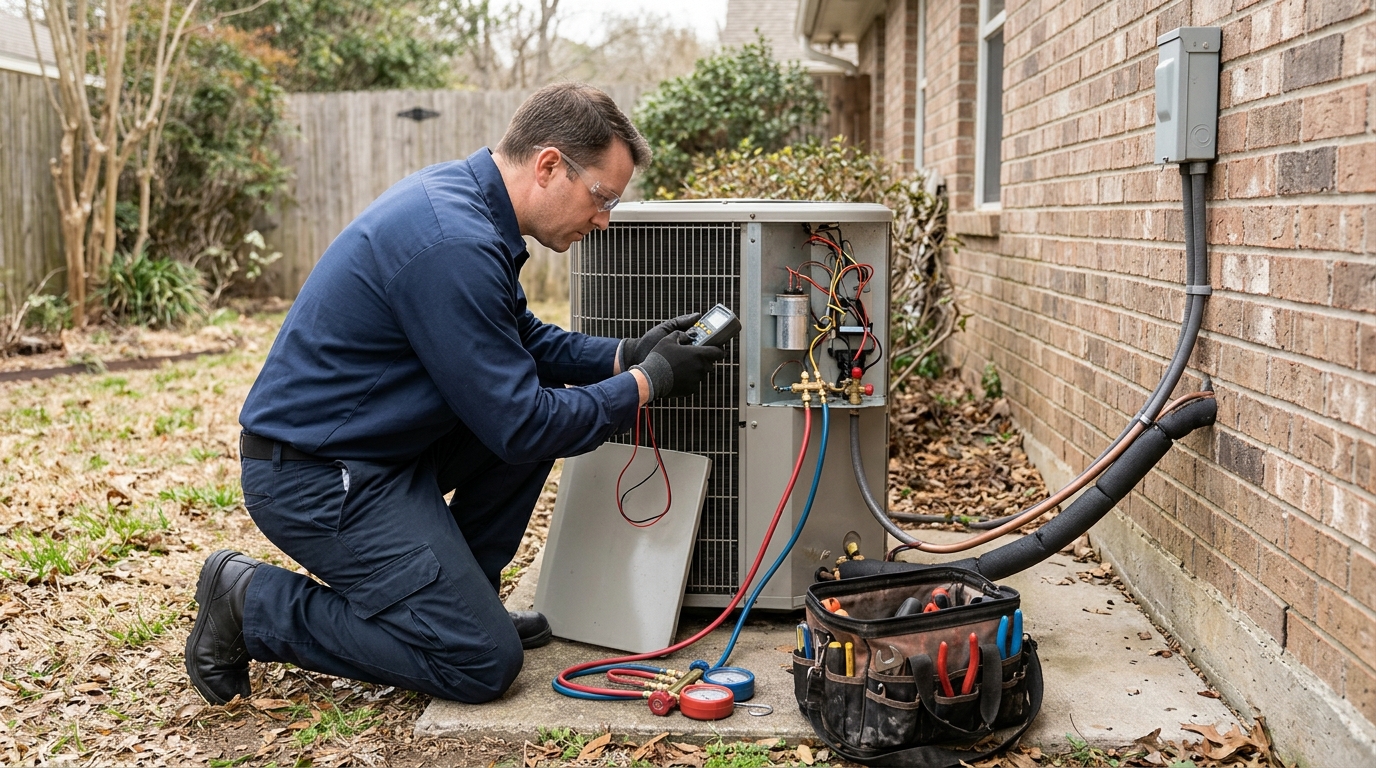

An air conditioner that turns on but does not cool the home properly can be frustrating because the visible symptom does not reveal the actual fault. The cause may involve airflow, thermostat settings, drainage, electrical components, or the refrigeration circuit. Several of these problems can look alike from the outside, so a sound diagnosis depends on testing rather than replacing a part based on guesswork.
Homeowners searching for air conditioner repair san jose ca should understand how a repair visit is meant to work. The goal is not simply to get cold air coming through the vents for a short time. A useful visit should identify the cause of the complaint, explain the proposed correction, and check the system’s operation after the repair where appropriate.
What you can check before the appointment
Start with the thermostat. Confirm that it is set to cooling, that the target temperature is below the current indoor temperature, and that the display appears normal. If the model uses batteries, check them as directed by the manufacturer. These simple checks can rule out a control setting issue, but they cannot establish whether the internal components are operating correctly.
Next, look at the air filter and visible supply and return grilles. Replace a heavily clogged filter with the correct type and size, and move furniture or other obstructions away from vents. If one room is affected while the rest of the home cools normally, note that difference. The cause may relate to that room’s airflow or ductwork rather than the central equipment.
Do not remove electrical panels or reach into the outdoor unit. If the system trips a breaker repeatedly, produces smoke or a burning smell, makes severe grinding noises, or leaks water near electrical equipment, turn it off where safe and seek prompt help. Repeatedly restarting equipment with an unresolved electrical or mechanical fault can create further risk.
How the technician narrows down the cause
The technician should begin by asking what changed and when it happened. A problem that appears only during certain conditions can suggest a different set of possibilities from a system that never cools properly. The technician may inspect the filter, coil, fan, drain line, thermostat, visible wiring, and other accessible parts, then choose tests based on the symptoms.
Airflow is an important starting point. If too little air passes across the indoor coil, cooling performance may deteriorate and icing may occur. A dirty filter, a blower problem, blocked return air, or a duct restriction may contribute. Cleaning or replacing one visible component may be appropriate in some cases, but the full cause should be considered if the symptom persists.
If airflow appears adequate, the technician may investigate controls, electrical operation, the outdoor fan, compressor-related behavior, or the refrigeration circuit. A unit that runs without cooling does not automatically have a refrigerant leak, and a warm room alone is not enough to justify adding refrigerant. Measurements and system-specific tests are needed to distinguish among possible faults.
Why the explanation matters before a repair
Ask the technician to state the confirmed fault and describe the evidence behind it. For example, a recommendation should connect the reported symptom with inspection findings or test results, not rely only on a broad statement that the unit is old or inefficient. If more testing is needed, ask what remains uncertain and why that test is necessary.
Request an estimate showing the proposed work and any parts involved. If the repair involves a costly component, ask whether the system has other known problems that could affect the outcome. A part may have failed because of its own condition, but faults can sometimes be related to airflow, power supply, drainage, or control problems. Identifying contributing factors reduces the risk of treating only the immediate symptom.
Ask whether the estimate includes testing after the repair. A completed repair should be followed by an appropriate check that the system responds correctly and that the reported issue has been addressed. If the repair cannot fully confirm operation because of the conditions at the time, the technician should explain that limitation rather than promise an outcome that has not been tested.
When repeated repair may point to a bigger issue
A single fault does not necessarily mean an air conditioner needs replacement. However, repeated breakdowns, recurring problems in the same area, or a series of expensive repairs may justify assessing the system as a whole. Ask for a comparison based on the current fault, equipment condition, likely future needs, and the cost of any duct or control work required.
Replacement should not be presented as the automatic solution to every cooling problem. If the real issue is restricted ductwork, a poor return-air path, or an incorrectly configured thermostat, a new unit alone may not solve it. On the other hand, if major equipment is badly deteriorated, a repair may offer limited value. The recommendation should explain the trade-offs in the context of the actual property.
It may help to keep a record of repair dates, repeated symptoms, parts replaced, and the results. Those records can reveal whether faults are isolated or recurring and provide a clearer basis for future decisions.
How to prepare for a productive visit
Clear access to the indoor and outdoor units, thermostat, and relevant service areas. Note the time of day the problem appears, whether the outdoor unit runs, and which rooms are affected. If a leak or unusual noise occurs only occasionally, describe the pattern without attempting to recreate it in an unsafe way.
After the appointment, keep the invoice and any diagnostic findings. Ask what maintenance remains due and what warning signs should lead you to turn the system off. The most useful outcome is a clear understanding of the fault, the work completed, and any limits or follow-up needs.
Conclusion
Reliable air conditioner repair san jose ca depends on a diagnosis that connects symptoms to verified findings. Homeowners can check settings, filters, and blocked vents, but electrical and refrigerant work should be left to qualified professionals. Understanding the role of a thermostat helps explain why correct sensing and control settings matter, while also recognizing that a thermostat cannot correct a mechanical fault elsewhere in the system.