


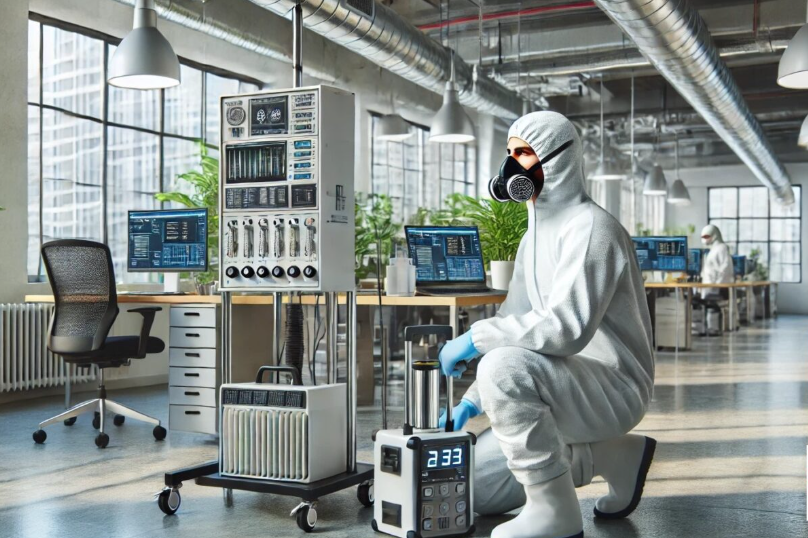

The air inside a home or business can contain particles, gases, moisture, and other pollutants that are not always visible or easy to identify. Persistent odors, excessive dust, unusual humidity, poor ventilation, or recurring concerns about indoor comfort may indicate that a closer evaluation is needed. Searching for indoor air quality testing near me can be a practical starting point when property owners want measurable information rather than relying only on assumptions. A professional assessment can examine specific indoor conditions and help determine whether HVAC performance, ventilation, moisture, or another source may be contributing to the problem.
Indoor air quality is influenced by many factors, including heating and cooling equipment, building materials, cleaning products, outdoor air infiltration, combustion appliances, humidity, and everyday activities such as cooking. There is also no single test that can identify every possible indoor contaminant, so the appropriate assessment depends on the property’s circumstances and the concerns being investigated. For homeowners and business operators, understanding what professional testing can measure and how the results should be interpreted can make it easier to choose appropriate corrective measures.
What Does Indoor Air Quality Testing Actually Measure?
Indoor air quality testing can involve several different measurements depending on the building and the suspected source of the problem. Common assessment areas include particulate matter, carbon dioxide, carbon monoxide, temperature, relative humidity, and certain volatile organic compounds. Targeted testing may also be appropriate for concerns involving mold-related conditions, radon, or specific chemical pollutants. The important point is that testing should be selected according to the question being investigated. A basic consumer monitor, for example, may track selected particles or gases over time but cannot provide a complete picture of every potential contaminant. Professional assessment can combine measurements with an inspection of the property, HVAC equipment, ventilation pathways, and visible moisture conditions, creating more useful context for understanding the results.
When Should You Consider Indoor Air Quality Testing?
Testing can be worth considering when indoor environmental problems persist despite ordinary cleaning and maintenance. Strong or recurring odors, visible moisture, unexplained condensation, excessive dust, unusual humidity, or consistently stuffy rooms may justify a closer look. Testing can also be useful after certain renovation projects, water intrusion, or changes to ventilation and HVAC equipment. Another important consideration is whether a particular problem occurs only in one room or during specific activities. Patterns like these can provide clues about possible sources and help determine which measurements are appropriate. Property owners should not assume that every indoor comfort complaint is caused by poor air quality, however. Temperature control, ductwork, insulation, equipment performance, and building design can all contribute to how an indoor environment feels, which is why a broader assessment is often more useful than relying on a single air sample.
How to Choose Indoor Air Quality Testing Near Me Services
When searching for indoor air quality testing near me, property owners should evaluate the provider’s testing approach rather than choosing solely on convenience or price. A qualified professional should ask about the reason for testing, the building’s history, recent water problems, HVAC operation, ventilation, unusual odors, and any specific concerns before deciding what measurements are appropriate. Customers should also understand whether the assessment involves direct measurements, laboratory sampling, visual inspection, or a combination of methods. There is no universal instrument that provides a complete indication of indoor air quality, so the equipment and testing strategy should match the conditions being investigated. Canada Clear documentation is equally important because raw measurements have limited value if the customer does not understand what they mean or what practical steps may follow.
The Role of HVAC Systems in Indoor Air Quality
Heating and cooling systems can strongly influence indoor air conditions because they circulate air throughout the building and may affect filtration, humidity, temperature, and ventilation. Restricted airflow, dirty components, poorly maintained equipment, inadequate filtration, or drainage problems can contribute to an uncomfortable indoor environment. However, replacing an air filter is not necessarily a complete solution. A highly restrictive filter can affect airflow if the HVAC system is not designed for it, while filtration cannot correct a water leak, inadequate ventilation, or a pollutant source inside the building. A professional evaluation should therefore consider the HVAC system as part of the larger indoor environment. Looking at airflow, filtration, moisture, ventilation, and equipment operation together can help identify whether the HVAC system is contributing to the problem or whether the source lies elsewhere.
Understanding Humidity and Moisture Problems
Humidity is an important part of indoor environmental assessment because excessive moisture can affect both comfort and building conditions. High humidity may contribute to condensation and create favorable conditions for biological growth, particularly where moisture problems already exist. Leaking plumbing, roof issues, poor drainage, condensation around HVAC equipment, and inadequate dehumidification can all introduce unwanted moisture. On the other hand, excessively dry indoor conditions can also affect comfort. Measuring humidity provides useful information, but a reading alone does not identify the source of a moisture problem. If excessive moisture is discovered, property owners should focus on locating and correcting the underlying source rather than attempting to cover up odors or symptoms. A moisture-focused inspection may therefore be just as important as an air sample when investigating persistent indoor concerns.
Professional Testing Versus Consumer Air Monitors
Home air-quality monitors can be useful for tracking selected conditions over time, particularly particulate matter, carbon dioxide, temperature, or humidity, depending on the device. They can help property owners notice patterns, such as changes during cooking, cleaning, or periods when windows are closed. However, consumer monitors generally measure only the pollutants and environmental factors for which they are designed and cannot provide a complete representation of indoor air quality. UProfessional testing takes a different approach by selecting measurement methods according to the building and the problem being investigated. In some circumstances, continuous monitoring may be useful; in others, targeted sampling or laboratory analysis may provide more appropriate information. The goal should be to answer a specific question about the indoor environment rather than simply collect as many measurements as possible.
What Happens During an Indoor Air Quality Assessment?
A professional assessment commonly begins with a conversation about the property’s history and the reason for testing. The technician may ask when the concern started, whether it affects particular rooms, whether the issue changes with weather or HVAC operation, and whether there have been renovations, leaks, or other relevant changes. A visual inspection can then help identify potential moisture sources, ventilation limitations, unusual odors, or HVAC-related concerns. Depending on the situation, instruments may be used to measure environmental conditions or samples may be collected for additional analysis. Because different contaminants require different testing methods, the exact process can vary significantly from one property to another. The final results should be interpreted within the context of the building rather than treated as isolated numbers.
What Should You Do After Receiving Test Results?
Test results are most useful when they lead to a practical understanding of what should happen next. If elevated humidity is associated with a moisture source, correcting the water problem should take priority. If ventilation appears inadequate, the HVAC and ventilation strategy may need to be evaluated. Where particulate levels are a concern, filtration, source control, and airflow may all deserve consideration. Chemical pollutants may require identifying and reducing the source rather than depending exclusively on an air-cleaning device. In some situations, additional specialized investigation may be appropriate. Property owners should avoid making major changes based on a single unexplained reading and should instead discuss unusual findings with a qualified professional who can interpret the information within the property’s construction and operating conditions.
Maintaining Better Indoor Air Quality Long Term
Good indoor air quality requires ongoing attention rather than a one-time testing appointment. Regular HVAC maintenance, appropriate filter replacement, moisture control, adequate ventilation, and prompt repairs can all contribute to a better indoor environment. Property owners should also monitor changes in odors, humidity, airflow, and dust because sudden changes can indicate that building conditions have changed. Keeping combustion appliances properly maintained and using appropriate safety alarms is particularly important where fuel-burning equipment is present. Source control is another essential part of indoor air management because reducing pollutants at their origin can be more effective than attempting to remove everything after it enters the air. A balanced approach involving source control, ventilation, filtration, and moisture management can provide a more sustainable strategy for maintaining comfortable indoor conditions.
Conclusion
Indoor air quality can be affected by numerous factors, and many potential problems cannot be identified simply by looking around a property. Professional testing can provide useful information about selected pollutants and environmental conditions while helping property owners investigate possible HVAC, ventilation, moisture, or source-related concerns. When searching for indoor air quality testing near me, the best approach is to choose a provider that uses appropriate testing methods, explains the results clearly, and considers the entire building rather than relying on a single measurement. By combining informed testing with proper HVAC maintenance, moisture control, ventilation, and source reduction, homeowners and businesses can make more confident decisions about creating a cleaner, more comfortable, and better-managed indoor environment.