


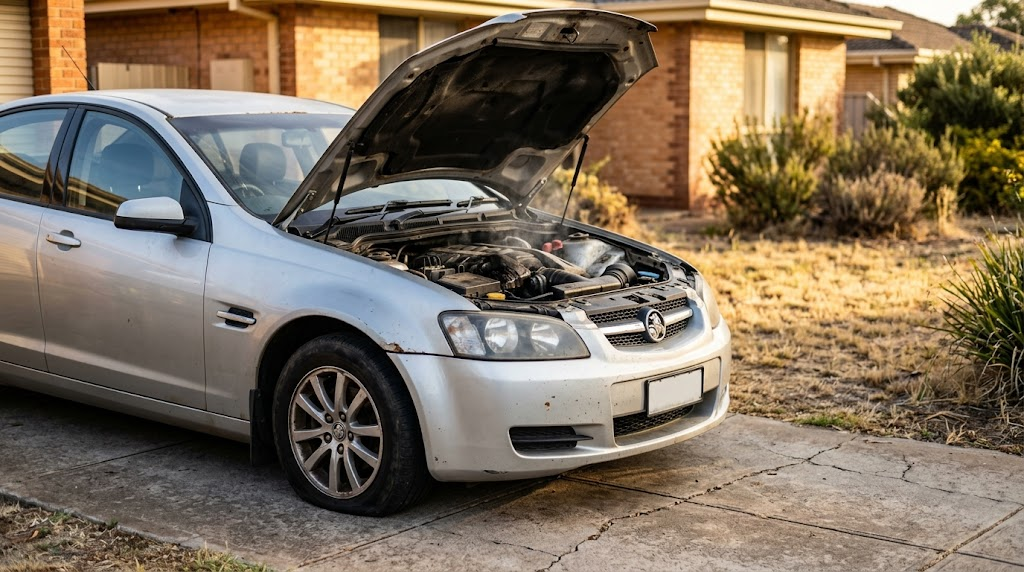

When your mechanic calls to say your engine is completely gone, your stomach drops. A blown motor usually means a repair bill that costs more than the car is actually worth. You are left staring at a heavy piece of metal that cannot drive, cannot be traded in easily, and is just taking up space in your driveway.
So, what is it actually worth now?
The short answer: Even with a dead engine, your car is not worthless. Depending on the make, model, weight, and the parts that still work, a blown-engine car in South Australia will generally get you anywhere from $150 to $1,500. If you own a heavier vehicle or a highly popular model, that number can sometimes climb much higher.
Here is a realistic breakdown of how much cash you can expect, how buyers figure out that number, and what you need to do to get the car off your property without losing money.
Why You Should Stop Trying to Sell It Privately
Your first thought might be to put the car on Facebook Marketplace or Gumtree and hope a mechanic or a car enthusiast wants a weekend project. In reality, selling a non-running car to a private buyer is incredibly frustrating.
People will send you lowball offers, ask you a hundred questions, and then fail to show up. Even if they do show up, they expect you to figure out how to transport the vehicle. Buyers who want project cars are looking for massive bargains, meaning they will try to talk your price down to nothing. You will spend weeks dealing with text messages at all hours for a car that continues to sit and leak oil onto your concrete. Beyond that, having random strangers come to your house to inspect a broken vehicle is a security risk many people simply do not want to deal with.
This is why most people turn to auto recyclers and wreckers. They buy the car for exactly what it is, and they bring their own tow truck.
How Buyers Calculate the Value of a Dead Car
When a car cannot run, its value shifts from being a form of transport to being a collection of parts and raw materials. When you ask for a quote, auto recyclers look at three main things to determine your payout.
1. The Weight of the Scrap Metal
A massive portion of your payout comes from the sheer weight of the steel and aluminum. Scrap metal prices change based on global demand, but the rule is simple: heavier cars bring in more money. A large four-wheel drive has significantly more steel than a small hatchback, so it automatically commands a higher base price.
2. High-Value Parts That Still Work
The engine might be dead, but the rest of the car is likely full of working components. If your transmission is still shifting perfectly, that is worth money. Recyclers also look for intact catalytic converters, straight body panels, clean interior seats, working alternators, and good alloy wheels. If your car is a popular model that many people drive, those parts are in high demand, which bumps up your offer.
3. The Make, Model, and Year
A 2018 Toyota Hilux with a blown engine will get a completely different offer than a 2005 sedan with the same problem. Newer cars have more expensive electronics and safety components that can be salvaged and resold.
Realistic Payout Ranges in South Australia
While every car is quoted individually, here is a rough guide to what you can expect in the current market:
- Small Hatchbacks: (Think older Toyota Yaris, Holden Barina, or Suzuki Swift). Because they are light and have less metal, expect somewhere between $150 and $400.
- Standard Sedans: (Like a mid-2000s Ford Falcon or Toyota Camry). These are heavier and often have good parts demand. You can usually expect between $250 and $600.
- SUVs and Utes: (Such as a Ford Territory or Nissan Navara). These vehicles contain a lot of heavy steel and high-value parts. Payouts typically range from $500 up to $1,500.
- Late-Model or High-Demand 4x4s: If you have a relatively new vehicle where just the engine failed, the rest of the parts are highly valuable. These can sometimes pull in several thousands of dollars, depending on the exact condition.
The Problem of Towing
One of the biggest mistakes people make is paying out of pocket to have a dead car towed away. Tow trucks are expensive. If a local towing company charges you $150 just to move the vehicle across town, you have just wiped out a huge chunk of your profit.
You need to find a buyer who includes vehicle collection in their price. When searching for cash for cars in Adelaide, always confirm that the removal is completely free and that there are no hidden transport fees deducted from your quote on the day of pickup. Working with an established local brand like Cash 4 Cars ensures the truck shows up on time and hands over the agreed amount before the car is loaded.
What Happens to Your Car After It Leaves?
People often wonder where the car actually goes once it is strapped to the flatbed. It doesn’t just sit in a massive pile of rust. Modern auto recycling is a highly organized process that keeps toxic materials out of local landfills.
First, the vehicle is drained of all hazardous fluids. The old engine oil, transmission fluid, coolant, and brake fluid are carefully extracted and sent off for safe processing. Leaving a broken car in your yard for years often results in these fluids slowly leaking into the soil, which is terrible for the environment.
Next, mechanics strip the car of any parts that can be sold locally. This helps other drivers fix their own cars affordably without needing brand-new, factory-made parts. Finally, the empty shell of the car is crushed and sent to a metal recycling facility, where the steel is melted down and reused in new manufacturing.
Handling the Paperwork in SA
Selling a car that doesn’t run is slightly different from a normal sale, but the paperwork is still straightforward.
First, take your license plates off the vehicle. Do not let the tow truck leave with your plates still attached. You need to take those plates to a Service SA center to officially cancel the registration. If you still have a few months of rego left on the car, you can usually get a partial refund for the remaining time, which puts a little extra money back in your pocket.
Second, you need to complete a Notice of Disposal. This proves that you are no longer the owner of the vehicle. Once the buyer signs their portion and hands over the cash, lodge this form right away. This protects you legally. If something happens to the car later on, or if a parking ticket somehow gets issued while the car is on a flatbed, you are completely clear of responsibility.
Make sure you also clean out your personal belongings before the truck arrives. Check the glovebox, under the seats, and the boot. People often forget their e-Toll tags, house keys, or important receipts. Once the car is crushed, you cannot get those items back.
Final Thoughts on Making the Call
Having an engine blow up is a terrible financial hit, but keeping the car sitting on your grass out of frustration won’t fix the situation. The battery will go flat, the tires will rot, and the metal will start to rust, which only lowers its scrap value over time. Worse, if you leave an unregistered, broken car parked on a public street, your local council will eventually hit you with heavy fines.
Make a list of your car’s details—make, model, year, and a brief description of the condition. Be honest about the engine. Call a few local auto recyclers, compare their offers, and make sure they include free towing. You can turn that stressful piece of driveway junk into a handful of cash by tomorrow afternoon.