


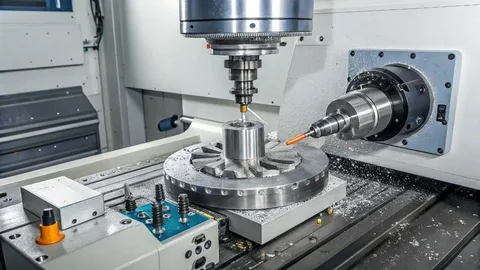

CNC machining has become one of the most essential manufacturing technologies in modern industry. From aerospace components to medical devices and automotive parts, it plays a major role in producing highly precise and reliable products. If you are wondering what is CNC machining, it is a computer-controlled manufacturing process that uses programmed instructions to operate cutting tools and shape raw materials into finished parts.
Unlike traditional manual machining, CNC (Computer Numerical Control) machining allows for automation, accuracy, and repeatability at a large scale. This makes it a backbone of modern production systems where consistency and efficiency are critical.
Understanding What Is CNC Machining
To clearly understand what is CNC machining, it is important to break down the concept. CNC machining refers to a manufacturing process where pre-programmed computer software controls the movement of machinery and tools. These machines can cut, drill, mill, and shape materials like metal, plastic, wood, and composites with extreme precision.
The process begins with a digital design created using CAD (Computer-Aided Design) software. This design is then converted into instructions using CAM (Computer-Aided Manufacturing) software, which guides the CNC machine step by step.
Key points about CNC machining:
- Uses computerized instructions to control machines
- Produces highly accurate and consistent parts
- Works with a wide range of materials
- Reduces human error in manufacturing
- Suitable for both prototyping and mass production
By automating the manufacturing process, CNC machining ensures that even the most complex designs can be produced with minimal manual intervention.
How CNC Machining Works in Manufacturing
When exploring what is CNC machining, understanding how it works in real production is essential. The process starts with a digital blueprint that defines the shape and dimensions of the final product. This blueprint is then translated into machine-readable code, often called G-code.
Once the program is loaded, the CNC machine executes the instructions with precision-controlled movements. Cutting tools remove material layer by layer until the final shape is achieved. This process is highly efficient and can run continuously with minimal supervision.
How CNC machining operates:
- Design creation using CAD software
- Conversion of design into G-code instructions
- Machine setup and calibration
- Automated cutting and shaping process
- Final inspection and quality control
Because the machine follows exact instructions, it can produce identical parts repeatedly without variation, making it ideal for industrial-scale manufacturing.
Types of CNC Machines and Their Uses
Another important aspect of what is CNC machining is the variety of machines involved. Different CNC machines are designed for specific tasks depending on the material and product requirements.
Common types include CNC milling machines, CNC lathes, CNC routers, and CNC plasma cutters. Each machine has a unique function and is used in different industries such as automotive, aerospace, electronics, and construction.
Types of CNC machines:
- CNC Milling Machines: Used for cutting and drilling complex shapes
- CNC Lathes: Ideal for cylindrical parts like shafts and bolts
- CNC Routers: Used for wood, plastic, and soft metals
- CNC Plasma Cutters: Used for cutting thick metal sheets
- CNC Laser Cutters: Provide high-precision cutting for detailed designs
Each type of machine brings specialized capabilities, allowing manufacturers to choose the best tool for their production needs.
Advantages of CNC Machining in Modern Industry
Understanding what is CNC machining also involves recognizing its benefits. CNC machining has transformed manufacturing by increasing speed, accuracy, and scalability. It reduces human involvement in repetitive tasks while improving production quality.
Industries prefer CNC machining because it allows for mass production without sacrificing precision. It also supports complex designs that would be difficult or impossible to achieve manually.
Benefits of CNC machining:
- High precision and accuracy in production
- Reduced production time and labor costs
- Ability to produce complex geometries
- Consistent quality across large batches
- Improved safety by reducing manual operation risks
These advantages make CNC machining a critical technology in modern manufacturing systems, especially for industries requiring tight tolerances.
Applications of CNC Machining Across Industries
When discussing what is CNC machining, it is important to highlight where it is used. CNC machining is widely applied across multiple industries due to its versatility and efficiency.
From producing aircraft components to creating medical implants, CNC machines are used wherever precision and reliability are required. The automotive and electronics industries also rely heavily on CNC technology for mass production.
Common applications of CNC machining:
- Aerospace industry for engine and structural parts
- Automotive industry for engine components and gears
- Medical industry for surgical tools and implants
- Electronics industry for circuit boards and housings
- Construction industry for custom metal and wood parts
The flexibility of CNC machining allows it to adapt to different production needs, making it one of the most valuable technologies in modern engineering.
Conclusion
In summary, understanding what is CNC machining reveals how important this technology is in today’s manufacturing world. It is a computer-controlled process that delivers precision, speed, and efficiency across a wide range of industries. From design to production, CNC machining ensures that complex parts are created with consistent quality and minimal error.
As industries continue to advance, CNC machining will remain a key driver of innovation and productivity, shaping the future of manufacturing and engineering worldwide.