


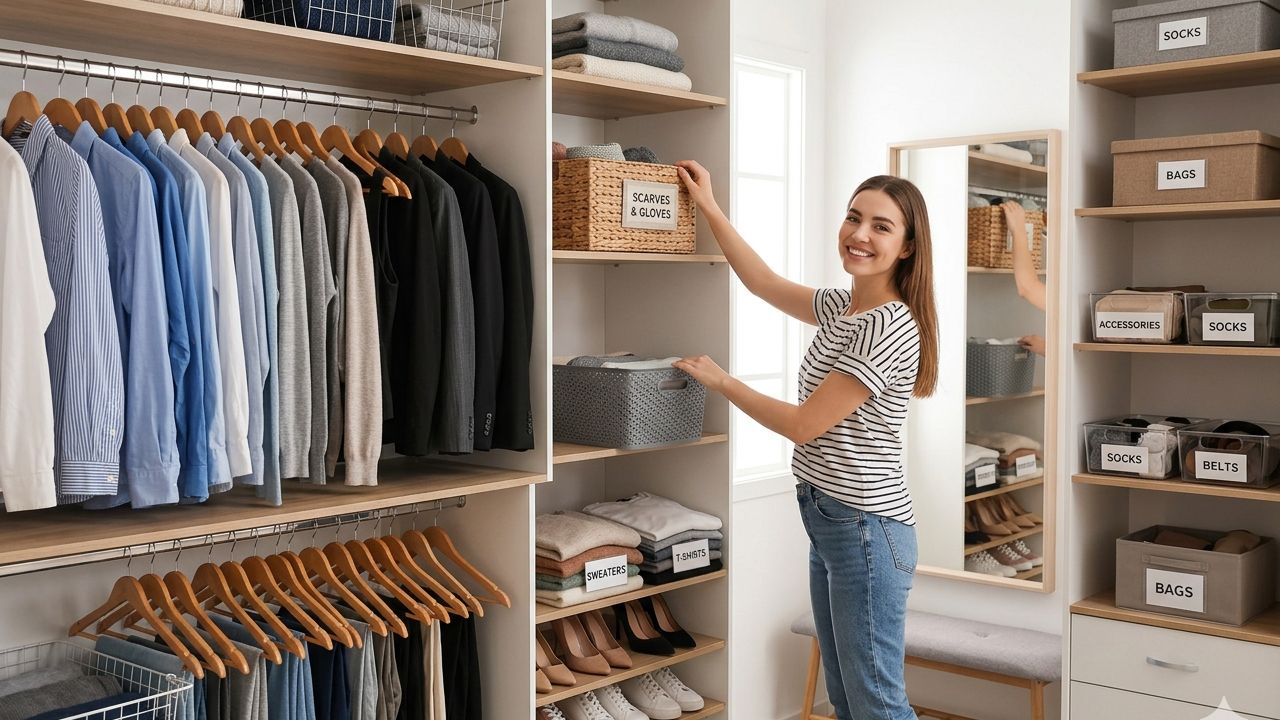

A well-organized closet can completely change the way you start and end your day. Instead of wasting time searching for clothes, shoes, or accessories, everything becomes easy to find and neatly arranged. If your closet feels overcrowded or chaotic, learning how to organize a closet properly can help you create a more functional and stress-free space.
This guide explains practical steps, smart storage ideas, and long-term maintenance tips to help you transform any closet—big or small—into an organized system that actually works.
Why Closet Organization Matters
Before jumping into the process, it is important to understand why closet organization is worth the effort. A messy closet does more than just look bad—it affects your daily routine and decision-making.
A well-organized closet helps you:
- Save time when choosing outfits
- Keep clothes in better condition for longer
- Reduce unnecessary shopping by seeing what you already own
- Create more usable space in small areas
- Maintain a cleaner and more peaceful home environment
Once you understand these benefits, organizing becomes less of a chore and more of an investment in your lifestyle.
Step 1: Empty and Assess Your Closet
The first and most important step in learning how to organize a closet is to completely empty it. This allows you to see the actual space you are working with and evaluate everything you own.
Take Everything Out
Remove all clothing, shoes, bags, and accessories. Place them on your bed or a clean surface so you can clearly see the volume.
Assess Your Items Honestly
Go through each item and ask yourself:
- Do I wear this regularly?
- Does it still fit me well?
- Is it in good condition?
- Would I buy this again today?
Be honest during this stage. Most people realize they are keeping items they no longer need or use.
Step 2: Declutter Before Organizing
Decluttering is the foundation of a functional closet. Without it, even the best organization system will fail.
Create Four Categories
Sort your items into:
- Keep
- Donate
- Repair
- Discard
Be Practical, Not Emotional
It is common to hold onto clothes for sentimental reasons. However, if an item has not been used in over a year, it is usually safe to let it go.
Seasonal Consideration
If you are organizing during summer, consider storing winter clothes separately and vice versa. This instantly reduces clutter in your main closet.
Step 3: Clean the Closet Space
Once your closet is empty, take the opportunity to clean it thoroughly. This step is often skipped but makes a big difference.
Cleaning Checklist
- Wipe shelves and rods
- Vacuum or sweep the floor
- Remove dust from corners
- Check for moisture or odor issues
A clean base ensures your organized system stays fresh and hygienic.
Step 4: Plan Your Closet Layout
Before putting items back, plan how you want your closet to function. Good organization is about strategy, not just stacking items neatly.
Group Similar Items Together
Organize clothing into categories such as:
- Formal wear
- Casual wear
- Work outfits
- Seasonal clothing
- Accessories
Think in Zones
Divide your closet into sections:
- Hanging area for dresses, shirts, and coats
- Folded section for jeans and sweaters
- Shoe storage at the bottom
- Accessories in drawers or boxes
This zoning method makes it easier to maintain order long-term.
Step 5: Use Smart Storage Solutions
Storage tools can dramatically improve your closet space, especially in small homes.
Hanging Organizers
Use hanging shelves for folded clothes or bags. These are especially useful in smaller wardrobes.
Storage Boxes and Bins
Labelled bins help keep items like scarves, belts, or seasonal clothing organized and hidden from view.
Drawer Dividers
These are perfect for separating socks, underwear, and small accessories.
Shoe Racks
Instead of stacking shoes randomly, use a shoe rack or clear boxes to keep pairs visible and protected.
Step 6: Arrange Clothes Strategically
Now comes the most satisfying part—placing everything back in an organized way.
Use the Right Hanging Method
- Long dresses and coats should be grouped together
- Shirts and tops should be hung by type or color
- Use uniform hangers for a cleaner look
Fold Efficiently
Fold clothes vertically instead of stacking them horizontally. This method saves space and improves visibility.
Organize by Color or Category
Many people find it helpful to arrange clothing by color gradient or category. This makes outfit selection faster and more visually appealing.
Step 7: Maximize Small Closet Space
If your closet is small, smart optimization becomes even more important.
Use Vertical Space
Install extra shelves above hanging rods to store less frequently used items.
Add Hooks
Hooks can hold bags, caps, or frequently used accessories.
Double Hanging Rods
A second rod allows you to double your hanging capacity for shorter clothes like shirts and skirts.
Step 8: Maintain Your Organized Closet
Organizing is not a one-time task. Maintenance is what keeps your closet functional over time.
Follow the One-In, One-Out Rule
Whenever you buy a new item, remove an old one. This prevents clutter from building up again.
Weekly Reset
Spend a few minutes each week returning misplaced items to their proper place.
Seasonal Reorganization
Every few months, rotate your wardrobe based on the season and review unused items again.
Common Mistakes to Avoid
Many people struggle with closet organization because of a few common mistakes.
Overstuffing the Closet
Cramming too many items into a small space makes everything harder to access and maintain.
Ignoring Categories
Without grouping items, your closet will always feel messy even if it looks tidy.
Buying Too Many Organizers First
It is better to declutter first, then buy storage solutions based on actual needs.
Practical Example of a Well-Organized Closet
Imagine a closet divided into three clear sections:
- Left side: work clothes and formal outfits
- Middle: daily casual wear arranged by color
- Right side: jackets and seasonal clothing
At the bottom, shoes are neatly placed in racks, while accessories are stored in labeled boxes on a shelf above. Everything has a defined place, making it easy to maintain order.
This simple structure reduces stress and saves time every single day.
Benefits You Will Notice Immediately
Once you properly apply these steps, you will start noticing improvements right away:
- Faster morning routines
- Better outfit coordination
- More space in your room
- Reduced clutter anxiety
- Improved clothing care and longevity
These benefits make closet organization one of the most impactful home improvement tasks.
Conclusion
Learning how to organize a closet is not just about cleaning—it is about creating a system that supports your daily life. When your closet is structured, decluttered, and easy to maintain, you save time, reduce stress, and make better use of your space.
By following a step-by-step approach—decluttering, cleaning, planning, and organizing—you can transform even the most chaotic closet into a well-designed storage system. The key is consistency. Once you maintain good habits, your closet will stay organized for the long term without requiring constant effort.