


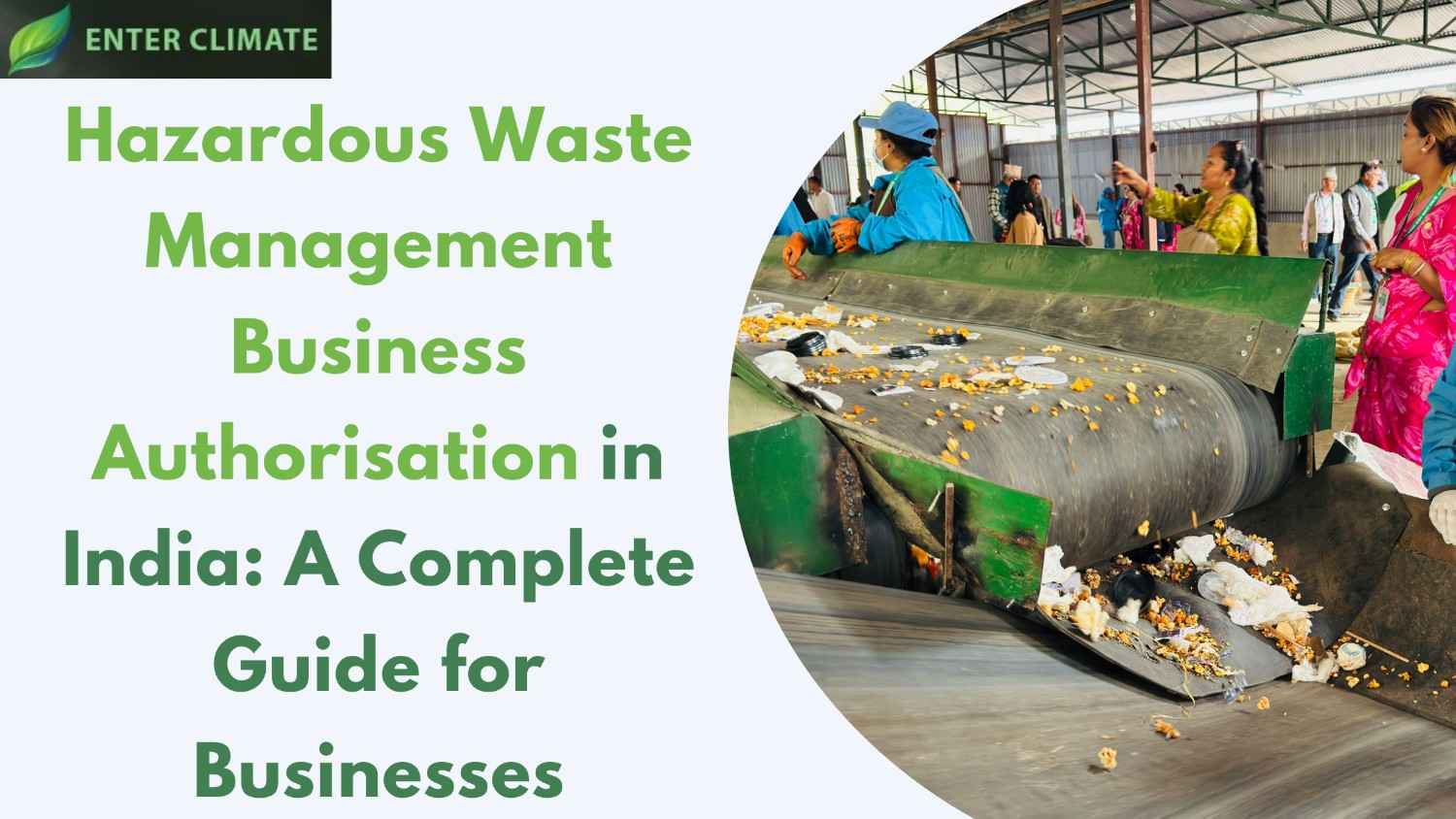

Running a business is exciting. But along with making products and earning profits, businesses also create waste. Some waste is normal, like paper or food. But some waste is dangerous, and this is called hazardous waste.
Hazardous waste can harm people, animals, and the environment if it is not handled properly. That’s why the Indian government has strict rules. If your business deals with such waste, you must take Hazardous Waste Management Business Authorisation.
What is Hazardous Waste?
Hazardous waste is any waste that can be harmful. For example:
-
Chemicals from factories
-
Used oil
-
Old batteries
-
Electronic waste (like broken laptops and phones)
If these are thrown anywhere, they can pollute water, air, and soil.
What is Hazardous Waste Management Business Authorisation?
This is a legal permission given by the government. It allows businesses to:
-
Generate hazardous waste
-
Store it safely
-
Transport it
-
Recycle or dispose of it properly
Without this authorisation, a business can face heavy penalties or even shutdown.
Why is this Authorisation Important?
Think of it like a rule in school. If everyone follows rules, everything stays safe and clean.
In the same way:
-
It protects the environment
-
It keeps workers safe
-
It builds trust with customers
-
It avoids legal trouble
Who Needs This Authorisation?
Any business that deals with harmful waste must apply. For example:
-
Manufacturing industries
-
Recycling units
-
Battery importers
-
Scrap and vehicle dismantling units
Key Licenses You Should Know
When we talk about hazardous waste, there are some related approvals too. Let’s understand them one by one.
1. EPR Compliance for E-Waste Management
EPR means Extended Producer Responsibility. It simply means:
If you make or sell electronic items, you are responsible for their waste too.
Under EPR Compliance for E-Waste Management, businesses must:
-
Collect old electronic items
-
Recycle them safely
-
Ensure they don’t harm the environment
This is very important for companies dealing with electronics.
2. Vehicle Scrapping License
Old vehicles create pollution and waste.
With a Vehicle Scrapping License, businesses can:
-
Dismantle old vehicles
-
Recycle metal and parts
-
Dispose of harmful materials safely
This helps reduce pollution and reuse resources.
3. Lithium-Ion Battery Import License
Lithium-ion batteries are used in:
-
Mobile phones
-
Electric vehicles
-
Laptops
But they can be dangerous if not handled properly.
So, if a business imports them, it needs a Lithium-Ion Battery Import License. This ensures:
-
Safe handling
-
Proper storage
-
Recycling after use
How to Get Hazardous Waste Authorisation?
Don’t worry, the process is simple if done step by step.
Step 1: Identify Your Waste
Understand what type of hazardous waste your business produces.
Step 2: Prepare Documents
You will need:
-
Business registration proof
-
Waste details
-
Site plan
-
Safety measures plan
Step 3: Apply to Pollution Control Board
Submit your application to the State Pollution Control Board (SPCB).
Step 4: Inspection
Officials may visit your site to check safety measures.
Step 5: Get Approval
If everything is correct, you will receive your authorisation.
Common Mistakes to Avoid
Many businesses make small mistakes that cause big problems:
-
Ignoring legal rules
-
Improper waste storage
-
Not renewing licenses
-
Mixing hazardous waste with normal waste
Avoid these to stay safe and compliant.
Benefits of Proper Compliance
Following the rules is not just about avoiding penalties. It also helps in:
-
Building a strong brand image
-
Attracting investors
-
Improving sustainability
-
Supporting a cleaner India
Final Thoughts
Hazardous waste management may sound complicated, but it is actually about being responsible.
If businesses handle waste properly, they protect:
-
People
-
Nature
-
Future generations
Getting Hazardous Waste Management Business Authorisation is not just a legal need—it is the right thing to do.
Author Profile
Upendra Sharma
Upendra Sharma is a compliance and business advisory expert with years of experience in environmental regulations and licensing in India. He specializes in areas like EPR compliance, hazardous waste management, and industrial approvals. Upendra is passionate about simplifying complex legal topics into easy-to-understand language so that businesses of all sizes can stay compliant and grow responsibly.
