


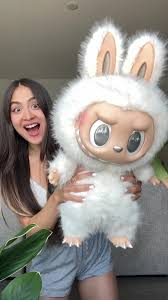

When people first encounter Labubu, the reaction is often a mix of curiosity and mild confusion. It is not immediately clear whether Labubu is cute, eerie, playful, or slightly unsettling. That ambiguity is exactly what has made this character so culturally magnetic in the world of designer toys. Created by artist Kasing Lung, Labubu exists in that fascinating in-between space where fantasy creatures feel almost real, as if they might slip out of a dream and onto your desk when you are not looking.
Labubu belongs to The Monsters universe, a whimsical yet slightly dark world filled with imaginative beings that seem to carry personalities far deeper than their small vinyl forms suggest. Unlike traditional toys designed purely for cuteness or mass appeal, Labubu thrives on contradiction. It has a mischievous grin lined with sharp teeth, oversized eyes that seem full of secrets, and a posture that suggests it is always on the verge of doing something unexpected. This blend of innocence and chaos is what makes Labubu not just a collectible, but a storytelling object.
The Artistic DNA Behind Labubu
The origin of Labubu cannot be separated from the artistic vision of Kasing Lung, whose work often blends European fairy tale aesthetics with Asian illustration sensibilities. Before Labubu became a collectible figure, it existed as part of illustrated narratives filled with dreamlike forests, strange creatures, and emotional undertones that feel both nostalgic and slightly haunting. Kasing Lung’s style is not about perfection; it is about emotion, atmosphere, and the subtle tension between beauty and strangeness.
Labubu emerged as one of the most recognizable expressions of this vision. Its design feels deliberately imperfect in a way that makes it more human-like than mechanical. The slightly uneven grin, the textured fur-like sculpting, and the expressive eyes all suggest personality rather than manufacturing precision. This is where Labubu separates itself from many mass-produced toys: it feels like it already has a story before the owner even imagines one.
The Rise of Designer Toy Culture and Labubu’s Place Within It
To understand Labubu popularity, it is important to understand the rise of designer toys as a cultural movement. Over the past two decades, collectible art toys have moved from niche subculture objects into globally recognized pieces of modern pop art. Companies like Pop Mart played a significant role in this transformation by making limited-edition designer figures accessible to a wider audience through blind box systems and curated series releases.
Labubu became one of the standout figures in this ecosystem because it embodies what collectors often seek: rarity, emotional resonance, and visual identity. Unlike traditional action figures tied to movies or franchises, Labubu is not dependent on a narrative universe that must be consumed through screens. Instead, it invites interpretation. Each collector may project a different personality or backstory onto it, turning each figure into a personal symbol rather than a mass-consumed product.
The blind box model also adds psychological depth to the experience. The anticipation of not knowing which version of Labubu you will receive creates a moment of suspense and surprise that transforms a simple purchase into a ritual. This uncertainty mirrors Labubu’s own chaotic personality, making the collecting experience feel strangely aligned with the character itself.
The Duality of Cute and Creepy
One of the most fascinating aspects of Labubu is its emotional duality. At first glance, it might appear cute in a distorted, cartoonish way. But upon closer inspection, there is something slightly eerie about its expression. This duality is not accidental; it is a core part of its design language. Labubu seems to exist in a psychological space between comfort and discomfort, between familiarity and the unknown.
This tension is what gives Labubu its staying power in the minds of collectors. Humans are naturally drawn to things that are not easily categorized. When something is too cute, it becomes predictable. When something is too scary, it becomes avoidable. Labubu exists in the narrow and compelling middle ground where both reactions coexist. It is this emotional complexity that makes people look twice, and then again.
In a way, Labubu reflects modern aesthetics as a whole. Many contemporary art forms embrace imperfection, emotional ambiguity, and surreal humor. Labubu fits perfectly into this cultural moment, where audiences appreciate characters that feel layered rather than one-dimensional.
Collecting Labubu: More Than Just Ownership
Owning a Labubu figure is often described by collectors as more than just acquiring an object. It becomes a form of identity expression. Displaying Labubu on a desk, shelf, or creative workspace signals a certain appreciation for artistic individuality and unconventional beauty. It tells others that the owner values imagination over conformity.
There is also a deeply personal connection that develops between collector and figure. Because Labubu comes in so many variations—different costumes, themes, and expressions—each version feels like a different emotional snapshot of the same character. Some versions appear more playful, others more mysterious, and some almost melancholic. Collectors often find themselves drawn to specific variations that resonate with their mood or personality.
This emotional attachment is part of what elevates Labubu from a toy to a collectible art piece. It is not about functionality or play in the traditional sense. It is about emotional resonance, storytelling, and visual connection.
Cultural Impact and Global Appeal
La bubu appeal is not limited to a single region or audience. It has become a global phenomenon, particularly among younger collectors who engage with visual culture through social media platforms. Images of Labubu figures frequently circulate online, often styled in aesthetically curated spaces that highlight their artistic presence.
This digital visibility has amplified Labubu’s cultural footprint. Unlike traditional collectibles that rely on physical conventions or niche stores, Labubu thrives in the online visual economy. Its expressive design translates well into photographs, making it highly shareable and instantly recognizable.
At the same time, Labubu represents a broader shift in how people relate to objects. In a world where digital experiences dominate, physical collectibles like Labubu offer something tangible and emotionally grounding. They serve as small anchors of personality in increasingly virtual lives.
The Emotional Language of Labubu
Perhaps the most compelling aspect of Labubu is its emotional language. It does not communicate through words or explicit narratives, but through expression, posture, and design tension. It can feel playful one moment and contemplative the next, depending on how it is perceived. This openness allows it to adapt to the emotional state of the viewer.
Unlike characters that are locked into fixed identities, Labubu feels fluid. It can be humorous, mysterious, chaotic, or even strangely comforting depending on context. This flexibility is rare in character design and is part of what gives it long-term relevance.
In many ways, Labubu acts as a mirror. People do not just see a character; they see a reflection of their own imagination. That interpretive freedom is what keeps the character alive beyond trends or seasonal popularity.